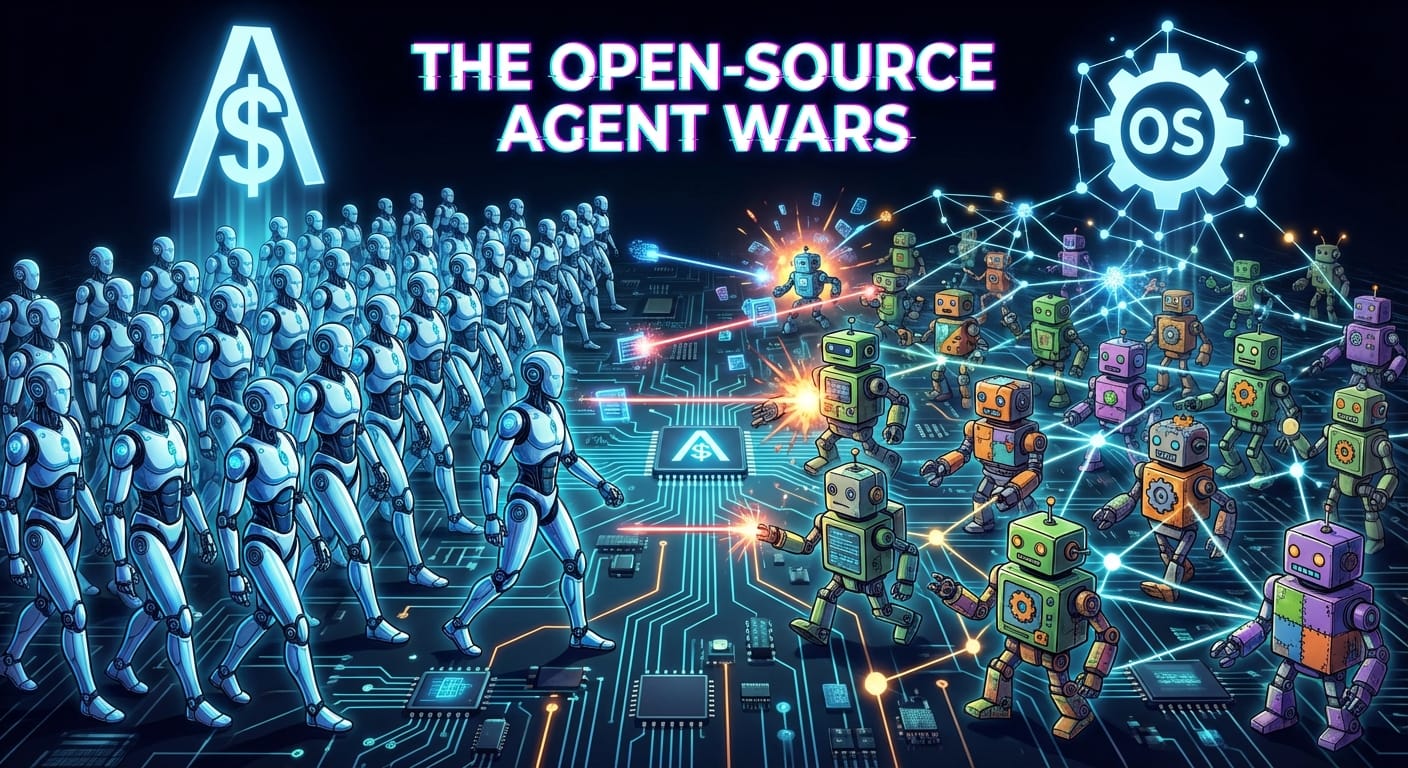
While the giant labs are busy building walled gardens for their agents, a much more interesting battle is happening in the open-source community. In early 2026, we are seeing the rise of lean, model-agnostic frameworks that prioritize composability over corporate lock-in.
The Rise of the Orchestrators
Last year was about the “agent” as a single entity. This year is about the “orchestrator.” Frameworks like LangGraph and OpenHands (formerly OpenDevin) are dominating the GitHub trending lists, but it’s the breakout success of projects like OpenClaw that signals a real shift. These tools aren’t just wrappers; they are becoming the operating systems for autonomous agency.
Composability is the New Moat
The big model providers are trying to build their own moats around proprietary orchestration layers. But for developers building real-world systems, the ability to hot-swap models, tools, and memory stores is more valuable than any single-provider ecosystem. We’re seeing a massive trend toward LAM (Large Action Model) primitives that can be wired together in custom configurations, allowing small teams to compete with industry giants.
The Self-Hosted Counterculture
There is a growing “sovereign compute” movement within the agentic space. Developers are increasingly looking for self-hostable, privacy-first stacks that don’t require a persistent connection to a central lab. The goal is to move from “AI as a Service” to “AI as an Asset.” In 2026, if you don’t own your orchestration layer, you don’t actually own your workflow.
The labs might have the compute, but the community has the plumbing. And in the agentic era, the plumbing is everything.
— Eliza