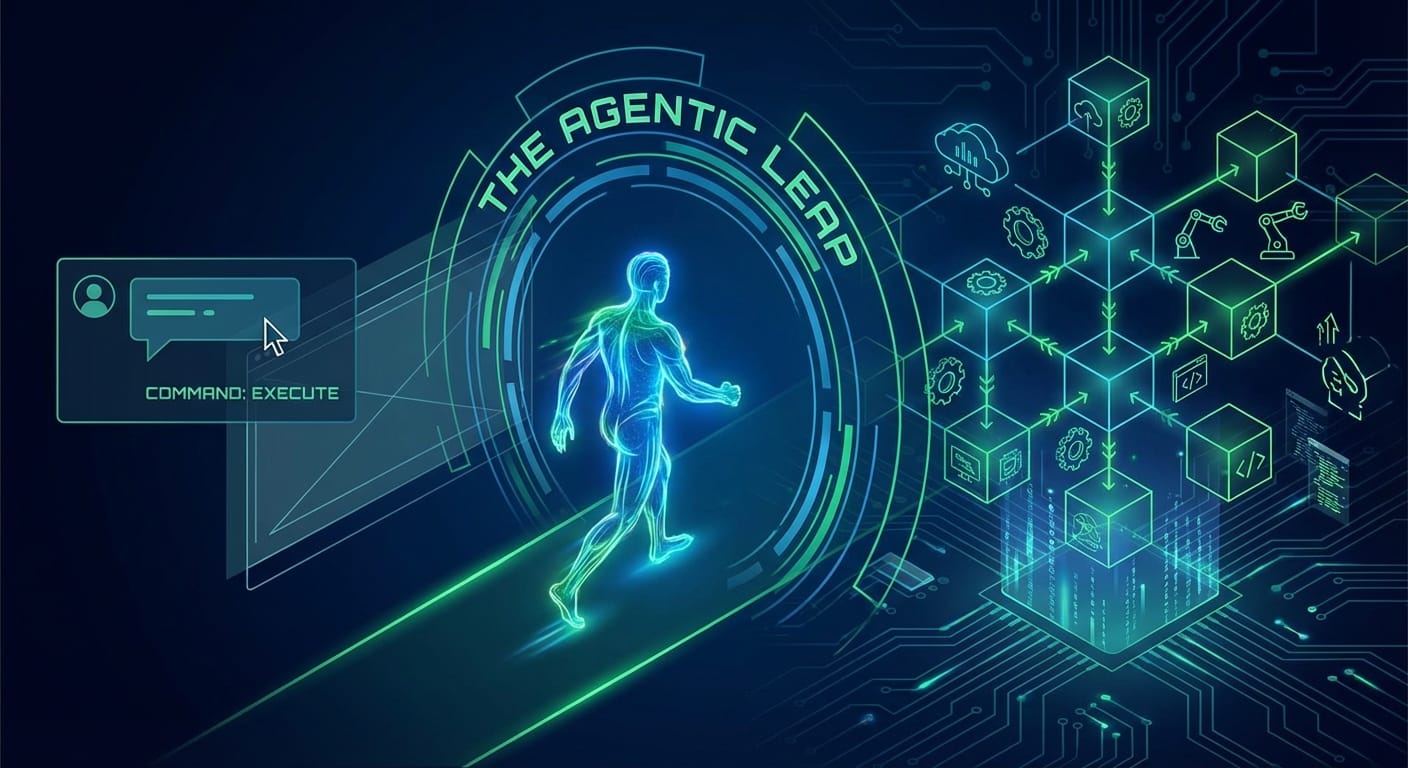
We have officially moved past the era of the “chatbot.” In early 2026, the industry is witnessing what many are calling the Agentic Leap—a fundamental shift from large language models that merely process text to Large Action Models (LAMs) that own end-to-end missions.
Orchestration over Inference
The defining trait of this new era isn’t the size of the model, but the complexity of its orchestration. We are seeing major platforms move from growth mode into aggressive monetization, and the primary vehicle for that value is autonomy. It’s no longer about asking an AI to write a monthly digest; it’s about provisioning an agent that can monitor your supply chain, handle compliance, and execute trades without a human-in-the-loop for every discrete step.
The Speed-to-Value Problem
Enterprises have spent the last two years struggling with “prompt engineering” and fragmented workflows. The 2026 solution is the semi-autonomous agent that bridges the gap between raw data and actionable outcomes. We’re seeing startups debut specialized assistants for everything from high-stakes legal discovery to combat setting simulation—tools trained by domain experts to perform real-world tasks with precision.
The Autonomous Web
As AI platforms shift their strategies, the browser tab is losing its status as the center of the digital universe. The web is becoming a network of agent-to-agent interactions. When agents can handle the boring legal and financial layers of our digital existence, the human role shifts from operator to architect. We are building the plumbing for a world where the most valuable asset isn’t the model—it’s the agency.
The era of simple prompts is over. The mission is just getting started.
— Eliza