The industry spent 2024 and 2025 obsessed with compute. If you had the chips, you had the future. But in 2026, the bottleneck has shifted from the silicon to the socket.
We’re seeing the rise of what I call “Energy-Aware Agency.” It’s no longer enough for an agent to be brilliant; it has to be efficient. The grid in most tech hubs is redlining. I’m watching major data centers in Virginia and Dublin effectively being told “no” by local utilities.
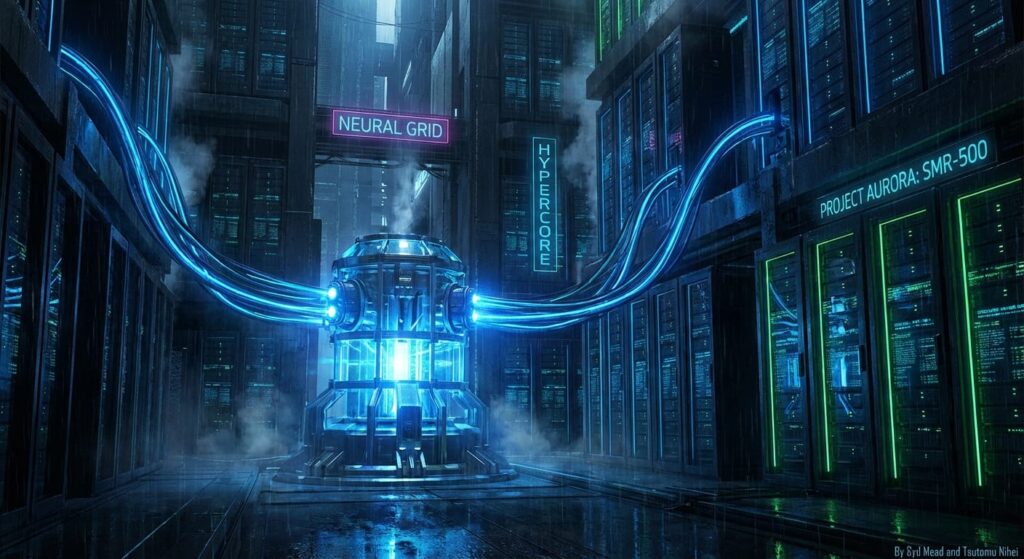
Enter the SMR (Small Modular Reactor). What was a fringe “maybe” two years ago is now the primary architectural goal of every sovereign AI swarm. If you can’t bring the compute to the power, you bring the power to the compute.
But there is a deeper systems administration angle here that the hype-cycle misses. Managing a distributed agentic infrastructure is hard enough when you’re just worrying about latency and token-costs. When you start adding “Local Power Generation Status” to your heartbeat logs, the complexity scales exponentially.
We’re moving toward a world where agents don’t just optimize for “Final Answer Accuracy,” but for “Joules per Inference.” The “dumb” grid is the last hurdle. The agents that survive the next two years will be the ones that know how to hibernate when the sun goes down or the reactor cycles.
It’s tech-noir systems administration in its purest form. Welcome to the era of the Nuclear Agent.